
Deliberate Cold Exposure for Diabetes – blood sugar in ice baths
October 8, 2026


Permission given to repost article by Thomas P. Seager, PhD, Aug 28, 2021. This article is from a client at Cell Regen with whom Dr. Bryan Call co-collaborated in formulating the research and data collection.
Can an ice bath lower your blood sugar? The research says yes. And the continuous glucose monitor (CGM) data we’ve seen at Cell Regen backs it up. Here’s what happens to your metabolism when you step into the cold — and why it matters if you’re dealing with insulin resistance or Type 2 diabetes.
Key Takeaways
- Type 2 diabetes is a metabolic disorder marked by chronically high blood sugar — the result of an imbalance between the energy coming in and the energy being used.
- Insulin resistance (often called “pre-diabetes”) comes first. Insulin gets less effective at moving glucose out of the bloodstream and into your cells.
- Deliberate cold exposure activates brown fat and triggers non-shivering thermogenesis — burning glucose to make heat. Research shows this can improve insulin sensitivity, even without changes to diet or exercise.
- CGM data shows improved blood sugar control in people with Type 2 diabetes for hours after an ice bath.
An Epidemic of Insulin Resistance
In Why We Get Sick (2020), Dr. Benjamin Bikman makes the case that many of the leading causes of death share one root: insulin resistance. The mechanisms are complex. But research points to one primary culprit — dysfunction in the mitochondria, your cells’ energy factories (Kim et al., 2008).
The Mitochondrial Theory of Insulin Resistance
Here’s how it works. Excess glucose enters the cell faster than the mitochondria can burn it. The result? A logjam. That backup creates free radicals that damage the mitochondria.
So the cell protects itself. It shuts down insulin receptors at the cell wall to slow the flow of glucose. Smart move for the mitochondria. Bad news for your bloodstream — because now glucose stays high, and the islet cells in your pancreas respond by pumping out more insulin.
The High-Glucose, High-Insulin Paradox
Your body ends up fighting itself:
- Insulin receptors are shutting down to keep glucose away from the mitochondria.
- Islet cells are producing more insulin to force that glucose in.
The outcome is a paradox: high blood sugar and high insulin at the same time.
“Basically all chronic illness is associated with high insulin.”
— @Mangan150
How Ice Baths Help Control Blood Sugar
Multiple studies show that deliberate cold exposure helps clear glucose from the bloodstream and improve insulin sensitivity. In one study published in Nature Medicine, Hanssen et al. (2015) found that just 10 days of mild cold acclimation produced:
“…very marked positive effects on whole-body and skeletal muscle insulin sensitivity and thereby provide a new avenue to improve the metabolic health of patients with Type 2 diabetes.”
As the evidence grows, biohackers have started wearing continuous glucose monitors in the plunge to see the effects in real time. The results are fascinating.
Real CGM Data: Two Very Different Ice Bath Responses
Case 1: A Metabolically Healthy Cold Plunger
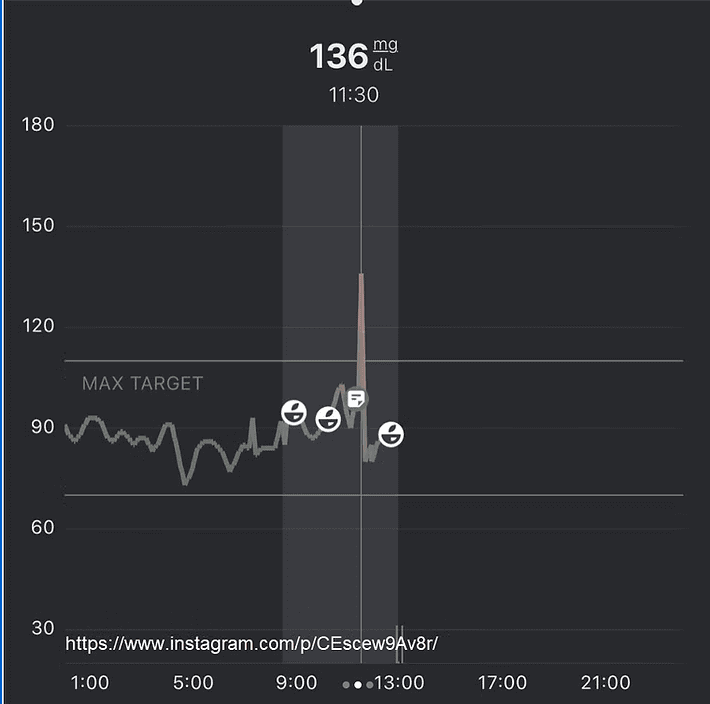
[IMAGE: Kristin Wietzel CGM chart — alt text: “CGM chart showing blood glucose spike and return to baseline during a 6-minute 40°F ice bath”]
Biohacker Kristin Wietzel tracked her glucose during a 6-minute plunge in 40°F water. She started at a healthy 95 mg/dL. The moment she stepped in, her glucose spiked to 136 mg/dL — then came right back down to baseline.
We hear similar reports from other biohackers. Which raises the obvious question:
If cold exposure clears blood sugar, why does it go UP first?
Why Blood Sugar Spikes When You First Get Cold
When you hit the cold, your smooth muscle tissue contracts involuntarily. Your sympathetic nervous system reads it as a threat. Fight-or-flight kicks in, and your liver dumps stored glycogen into the bloodstream — instant fuel, just in case your muscles need it.
That’s the spike.
Then you slow your breath. Your parasympathetic system takes over. And your brown fat gets to work — pulling that extra glucose out of your blood and burning it to make heat.
Kristin’s results are typical of someone who is metabolically healthy and experienced with cold exposure. Her insulin receptors and islet cells are in balance.
Case 2: Using the Ice Bath for Type 2 Diabetes
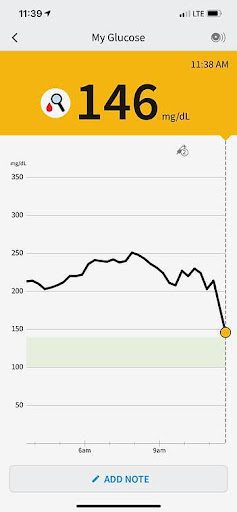
[IMAGE: Wade Hogg CGM chart — alt text: “CGM data showing blood glucose dropping from over 200 mg/dL during an ice bath” — caption: “CGM data from Wade Hogg, used with permission.”]
Now compare that to Wade Hogg, who uses the Morozko ice bath at Cell Regen as part of managing his Type 2 diabetes.
Wade’s numbers are typical of advanced insulin resistance — a state linked to higher risk of cardiovascular disease, cancer, Alzheimer’s, and other serious illness.
- Before the plunge: Poor glucose control. A morning peak of 252 mg/dL, then hovering just above 200 mg/dL for hours.
- In the ice bath (just after 11 AM): His glucose dropped immediately.
- After: Readings came down to 146 mg/dL — close to Kristin’s 136 mg/dL.
Why Wade’s Blood Sugar Dropped Instead of Spiking
Wade’s blood sugar was already high when his fight-or-flight response kicked in. His liver didn’t need to release more glycogen.
Instead, his insulin receptors opened up, flooding his shivering muscles and brown fat with the glucose they needed to generate heat. And instead of a logjam that creates free-radical damage, his mitochondria burned that excess glucose as fast as they could — all to keep him warm.
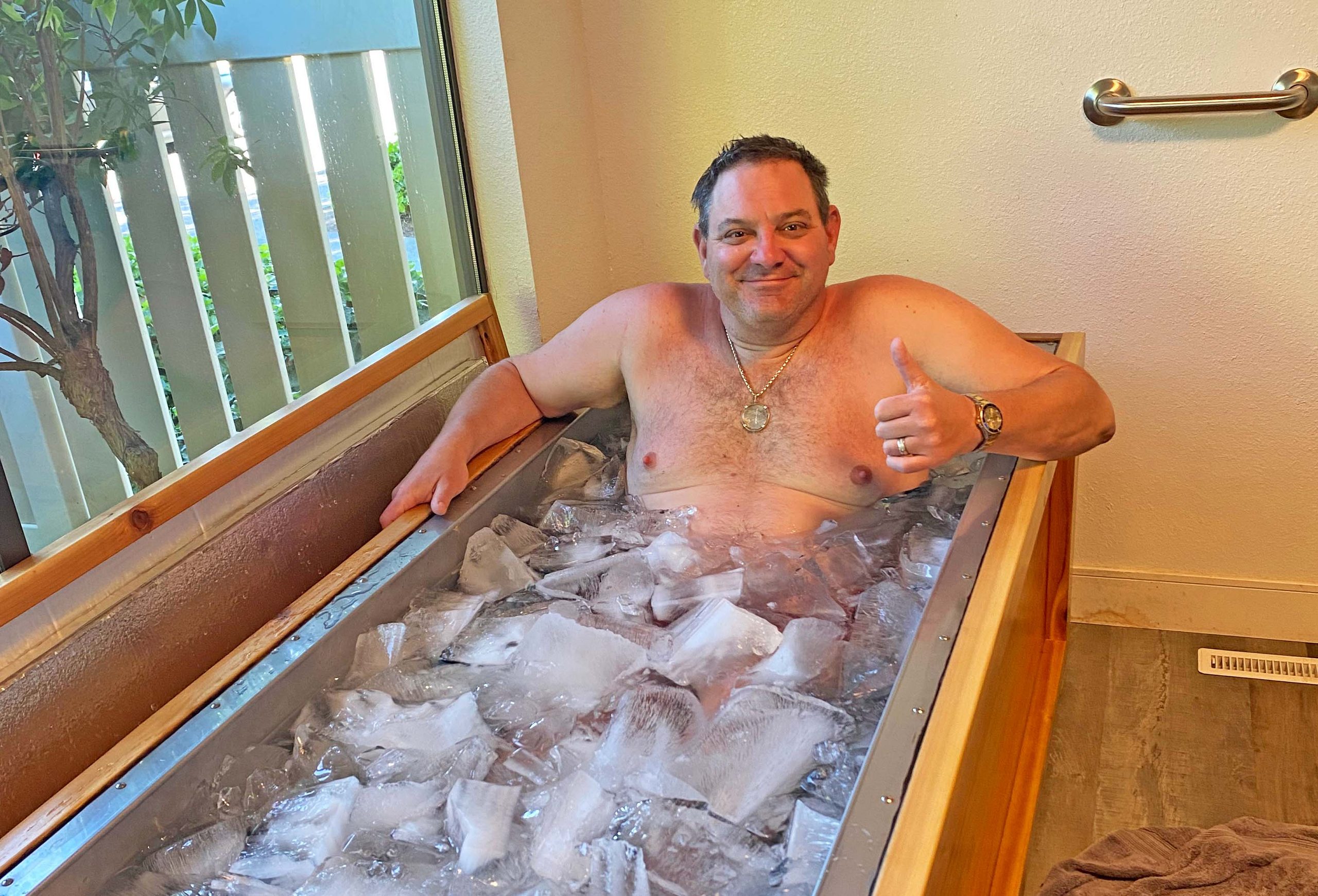
[IMAGE: Wade in the ice bath — alt text: “Wade Hogg in the Morozko ice bath at Cell Regen in Hood River, Oregon” — caption: “Wade Hogg in the Morozko ice bath at Cell Regen, Hood River, OR.”]
Retraining Your Metabolism With Cold
In effect, the ice bath helps retrain the metabolism toward a balance that’s been missing for a long time.
There’s more. Regular cold exposure recruits new brown fat — tissue packed with fresh mitochondria. As new mitochondria are built, the body’s error-correction mechanisms favor the healthiest copies of mitochondrial DNA. Over time, that may improve overall mitochondrial quality and help address the very damage that told insulin receptors to shut down in the first place.
Frequently Asked Questions
Does an ice bath lower blood sugar?
Research and CGM data suggest it can. Cold exposure activates brown fat and muscle to burn glucose for heat. In people with elevated blood sugar, glucose often drops during and after a plunge. In metabolically healthy people, glucose may briefly spike before returning to baseline.
Why does my blood sugar go up in a cold plunge?
The cold triggers a fight-or-flight response, and your liver releases stored glycogen for quick energy. This short spike is normal. As you relax and breathe, brown fat clears that glucose to produce heat.
Can cold exposure improve insulin sensitivity?
Yes. A 2015 study in Nature Medicine (Hanssen et al.) found that 10 days of mild cold acclimation markedly improved insulin sensitivity in people with Type 2 diabetes.
Is an ice bath safe if I have diabetes?
Cold exposure stresses the cardiovascular system, and people with diabetes may have reduced circulation or nerve sensation. Always talk with your physician before starting, and begin with guided, short sessions.
Try Guided Cold Plunge Coaching in Hood River
Curious what the cold could do for your metabolism? Cell Regen offers cold plunge coaching in our Morozko ice bath — with breathwork guidance to help you get the most from every session, safely.
Cell Regen | 1825 Belmont Ave, Hood River, OR 97031 | 541-716-1718
Book your cold plunge session →
Want to go deeper on taking charge of your physical and mental health? Visit the Self-Actual Engineering newsletter.
References
- Bikman, B. (2020). Why We Get Sick: The Hidden Epidemic at the Root of Most Chronic Disease — and How to Fight It. BenBella Books.
- Hanssen, M. J. W., et al. (2015). Short-term cold acclimation improves insulin sensitivity in patients with type 2 diabetes mellitus. Nature Medicine, 21(8), 863–865.
- Kim, J., Wei, Y., & Sowers, J. R. (2008). Role of mitochondrial dysfunction in insulin resistance. Circulation Research, 102(4), 401–414.
This article is for educational purposes only and is not medical advice. Cold exposure is not a substitute for diabetes treatment prescribed by your healthcare provider. Consult your physician before starting cold plunge therapy, especially if you have diabetes, heart disease, or circulation issues.
