
What in the world is a cellular upgrade?
October 7, 2026



Creating an “upgrade” in health through experience-based learning. Or in plainer terms… we like to touch stuff. If you don’t try it, how do you know it works?
Upgrading your health isn’t as crazy-sounding as the Netflix series where people are mutating their genes; really, it’s a name for something not crazy at all—the desire to be the absolute best version of ourselves.
The main thing that separates a conscious health hacker from the rest of the self-improvement world is a systems-thinking approach to our own biology.
You know how coffee feels like a shot of energy to your brain?
Pre-coffee you is sleepy… zzzzzz… Post-coffee you is WIDE AWAKE!!
The only difference is the coffee in your stomach.
The lesson is this: What you put into your body has an ENORMOUS impact on how you feel. We all know this. What we eat and drink is one way we alter our state. Music is another. If you put on smoooooooooooth jazzzzzzzz, you’ll feel different than if you blast T-T-T-TECHNO.
The things we put in our stomach and ears are inputs into our biology. As humans, we are complex systems. What goes into us affects what comes out of us, and I’m not just talking about our poop. Our behaviors, our health, and our performance in all areas of life are outputs.
If we want better outputs—to have more energy and focus, to be free of disease, to have a better memory, to perform optimally in business and athletics—then let’s tweak the things we put into our body and mind to stack the deck in our favor.
How does it work?
LET’S START WITH HOW YOU SIT/STAND…

1. Gut Punch Your Posture
It causes muscle tightness and destroys our potential for athletic performance. Eventually, it causes injury and chronic pain. We aren’t supposed to feel that pain. Kelly Starrett, founder of MobilityWOD and author of Becoming a Supple Leopard and Ready To Run, gave tips for restoring our natural mobility.
Tip 1: Spend 10 minutes foam rolling each day.
Simple and effective.
Tip 2: Maintain a neutral spine position.
He had everyone follow a sequence to stabilize their spine.
It causes muscle tightness and destroys our potential for athletic performance. Eventually, it causes injury and chronic pain. We aren’t supposed to feel that pain.
Kelly Starrett, founder of MobilityWOD and author of Becoming a Supple Leopard and Ready To Run, gave tips for restoring our natural mobility.
- Squeeze your butt.
- Breathe out and pull your ribcage down.
- Engage your abs 20%
- Set your head in a neutral position, ears in line with shoulders (imagine someone grabbing the top of your head above your ears and pulling upward). (Image source here.)
This same stabilizing sequence can be used while standing. While standing, also twist your feet into the ground (like a screw) to add more stability. Unfortunately, this posture is really hard to maintain while sitting. A more stable sitting position is to sit cross-legged or in a butt-to-ground squat in your chair. You’ll look silly doing it, but you’ll get the last laugh.
Kelly also had us play a game. If you see someone who isn’t engaging their abs, smack them in the stomach. A couple gut-smacks and you’ll be much more aware of your posture.
Recap 1: Spend 10 minutes foam rolling each day. 2: Every hour, practice resetting your posture by following the neutral-spine sequence. 3: Punch friends in the gut if they aren’t engaging their abs.

2. Eat Well to Feed Your Cells
Nutrition is very popular. Keto, Vegan, Vegetarian???
The biohacking or bulletproof diet is a hybrid… In short, eat… lots of veggies lathered in grass-fed butter (Kerrygold is a common brand), grass-fed beef, pasture-raised eggs, and low-mercury fish (like wild sockeye salmon), moderate starches and fruits. Cook lightly, if at all.
Drink Bulletproof coffee.
That’s a massive simplification to get you started. For full details, go here: Bulletproof Diet Book. JJ Virgin showed how sugar is linked to almost every common disease. It’s also MORE addictive than morphine.
Looking for an impactful biohack?
Try removing sugar from your diet.
Dr. Tom O’Bryan discussed the gut-brain connection.
If you have a food sensitivity but eat that food anyway, you get inflammation. Inflammation makes our brains dumber. Test for your food sensitivities, then stop eating those foods. Food sensitivities can be tested through an expensive but thorough alcat test, the Bulletproof Stress Detective app (using heart rate), or by doing the HR test yourself.
Recap 1: Eat veggies, healthy fats, high-quality protein. 2: Reduce sugar. 3: Avoid food sensitivities.

3. Rewild In Nature
Did you know every dog is a descendant of the Gray Wolf?
That adorable golden puppy with big blue eyes curled up in your lap… yep, he’s a wolf.
His great-great-great-great-great-grandfather wouldn’t be rolling over asking you to rub his belly. He’d be eating you for dinner. Even our very own pug!! HA- who would have thought little Lofa was of wolf-decent?
We have domesticated ourselves and made it taboo to think otherwise. We are not as fit, resilient, or adaptable and are much more prone to chronic disease than our ancestors. If domestication is the problem, then re-wilding is the solution. Here’s how we can re-wild our four systems for natural nutrition.
1. EAT LIVING, WILD FOODS
Humans, like most animals, eat living (or once-living) things for fuel—broccoli once cut from its stem, the leg of chicken amputated from its body, those mushrooms plucked from the ground, sauerkraut covered in tiny microbes. We need these wild foods. If you want to be a real wolf, go outside and forage these foods yourself.
2. DRINK UNPROCESSED SPRING WATER
What we drink is as important as what we eat, but most of us aren’t aware that our water is as processed as the processed food we now know to avoid. Most water has minerals removed and chemicals added. Instead, find a natural spring and load up. You can find one near you here: http://www.findaspring.com/ Otherwise, it’s better to drink water bottled in glass than tap water.
3. BREATHE AIR FROM NATURE
Do you think about the air you breathe as nutrition? As you can guess, natural air is more rejuvenating than the moldy air in our homes. Go outside. Another tip: To absorb oxygen most effectively, breathe deeply through your diaphragm.
4. EXPOSE YOURSELF TO SUNLIGHT
Sunlight is part of our natural nutrition, so expose your skin to those warm rays of sun. It’s time to rewild. Open your eyes and see that you are that little puppy. To become the wolf, go back to nature. Start by just spending a little more time outside.
5. GO OUTSIDE
But outside is dangerous and scary! Scientists think breathing in phytoncides—airborne chemicals produced by plants—increases white blood cell levels, helping us fight off infections and diseases. Being outside can improve memory, fight depression, and lower blood pressure — here are 11 science-backed reasons to spend more time.
- Decreases Stress
- Reduces Inflammation
- Eliminates Fatigue
- May help decrease depression and anxiety
- May improve and protect your vision
- Lower blood pressure
- Improve your focus
- Open to creativity
- Decrease chronic diseases
- Forests can boost your immune system
- Lower risk of early death

4. Lean into discomfort
Joe De Sena, creator of the Spartan races, says to Spartan Up and change your frame of reference.
A long time ago, people had low expectations and a high tolerance.
Today, we have high expectations and can tolerate very little. My great-grandfather came to the US with no money, no family, and no plan. He was happy to be alive. Low expectations. High tolerance. On my flight to LA, someone loudly complained about the wifi not working. “Life sucks!” High expectations. Low tolerance. It reminds me of this Louis CK bit: everything’s amazing and nobody’s happy (4 min video). How can you change your frame of reference then?
1. MAKE YOURSELF UNCOMFORTABLE
Attempt a Spartan Race
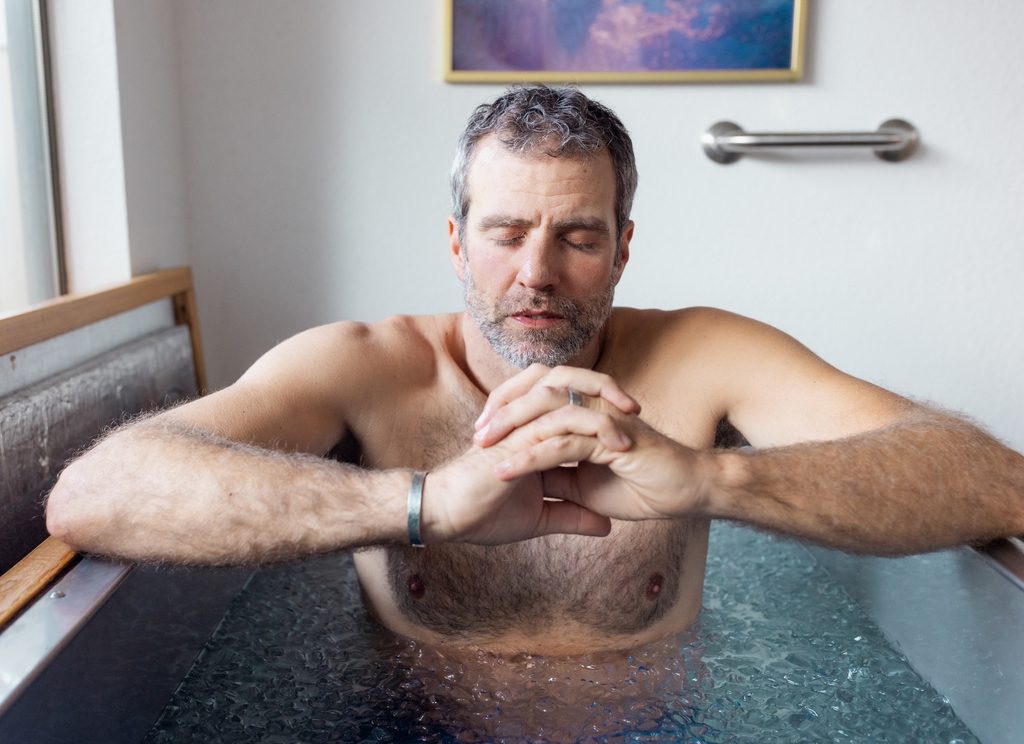
Take a cold shower
Try Rejection Therapy.
Watch Mark Moschel’s experience with 30 days of consciously being rejected; watch here: http://vimeo.com/79453884 (5 min video). Contemplate death. Read Seneca or Marcus Aurelius.
2. MEDITATE
To change where we direct our attention, we need to become aware of our attention. Then, we can consciously create the internal states, behaviors, feelings, situations, and meaning we desire. Meditation is the tried-and-true path to enhanced awareness. There are advanced methods of meditation, like neurofeedback and 40 Years of Zen, but meditation is always accessible and free. Start with meditation. Tim Ferriss has a general rule about meditation: the less time you think you have to meditate, the more time you need to spend meditating.
Recap 1: Put yourself in uncomfortable situations to lower your expectations and raise your tolerance. 2: Meditate.

5. Change your Brain with Music
Here’s my personal secret to health-hacking more focus: Put on headphones. Open Spotify. Play instrumental rock or electronic music.
When that’s on, the world around me disappears, and I can get lost in my work. To dig deeper into audio as a health hack, it’s important to understand how the brain works at a high level. Your brain has 100 billion neurons that use electricity to talk to each other.
At any moment, millions of neurons are talking at once, which produces a lot of electrical activity. When this activity is measured with an EEG, the result is a wave-like pattern called a brainwave.
The frequency of this brainwave depends on what you are doing.
Brainwaves 101: Beta (14–30 Hz): awake, concentrated, alert. We spend most of the day here.
Alpha (8–14 Hz): meditative state, awake but relaxed, twilight state between sleep and waking, improved memory recall.
Theta (4–8 Hz): light dreaming, access to unconscious mind.
Delta (0.1–4 Hz): deep dreamless sleep, restorative, complete loss of awareness.
In a process called Frequency Following Response, a consistent sound wave has been shown to change your brainwaves. In Bill Harris’ talk on dramatically increasing awareness, his research showed that audio entrainment helps meditators create awareness 8x faster than traditional meditation. Binaural beats are one example of audio brainwave entrainment. Here are a few others: https://www.focusatwill.com/ https://www.centerpointe.com/v2/
Recap 1: Put on headphones. 2: Try audio entrainment.

6. Hack Flow
A theme of this year’s conference was the elusive “flow state”.
Flow is that optimal state of consciousness when we feel and perform at our best.
Time slows down, you forget yourself, and you perform at a higher level than ever before. In other words, you know those times when you are kicking ass, and nothing can stop you?
That’s flow.
Steven Kotler, author of Rise of Superman, realized that action and adventure athletes are the only ones who consistently enter this state. As he says, since their sports put them frequently in life-or-death situations, it’s either “flow or die”.
Kotler’s research identified 17 triggers to enter flow. He also learned that flow is cyclical.
Before you enter flow, you must experience a struggle.
This is the learning phase.
Your brain shows beta waves in this phase (awake, concentrated).
Next, you must release completely.
This is when your subconscious can do its magic—consolidate the information and relax. Your brain shows alpha waves here (meditative state, awake but relaxed).
Then there is flow.
Theta waves (access to the unconscious mind)
Finally, you enter a recovery phase.
Delta waves (deep dreamless sleep, restorative). If you are struggling to complete something, push yourself a little longer. Then stop and do something completely different, like foam roll in the park. That release is a critical step to entering flow.
Recap 1: Work hard on something, then break and disconnect completely. When you return later, you’re more likely to experience flow.
7. Radical Gratitude
Interactive demo!
Try this.
Think this sentence and then pause and notice how you feel.
“Ugh, this guy has wasted the last 12 minutes of my life. I’ve learned nothing, and this demo he is asking me to do is bullsh*t.” …
hmmm ok …
Now try this one.
“I’m grateful for this opportunity to expand my worldview. I am practicing my ability to read information and filter what is meaningful to me.” …
Pause a moment …
Now one more. “I am MASSIVELY grateful this author injected caffeine into his veins to have the energy to compile all this useful information into one concise article. I am grateful to be learning something new today and am giddy to apply one of these techniques in my daily life. EVERYTHING IS AWESOME!!”
Wait, why weren’t you already thinking that?!? If you weren’t, you should watch this. You get the point though:
We can think about the same experience in many different ways.
If we are grateful, we positively change our perspective on the events in our lives. UJ Ramdas presented gratitude as a health-hack and offered four techniques to start your daily gratitude practice.
Gratitude Journal.
At its simplest, just write down 3 things you are grateful for each night. Pro tip: If you want email reminders, set up a Google Form (here’s a template) and use IFTTT to email yourself that link (If 10 pm, then email me the link to that form).
Five Minute Journal.
The journal created by UJ. Answer three questions each morning and two before bed. Puts you in the right mindset to start and end your day. (Link here) Gratitude Walk. UJ recommends doing this on your way to work. Be very present and feel gratitude for everything you see and experience during that short walk. Try to feel the gratitude in your heart.
Gratitude Visit. Write a letter (300 words) of love and gratitude to someone important to you. Set up a time to meet them, then take out the letter and read it to them. UJ says it is extremely transformative.
Gratitude is a daily practice, similar to meditation. Like meditation, it becomes more natural over time. In fact, gratitude and meditation go very well together, like peanut butter and jelly. (For those wondering, PB&J is not Bulletproof.)
Remember: What you put into your body affects what you get out. In this case, your thoughts create the world you experience. If you put gratitude in, you get gratitude out.
Recap 1: Develop a daily gratitude practice. YOUR MISSION: Pick one: Mobility, Nutrition, Nature, Attention, Music, Flow, Gratitude.
Try it. Commit to it for 7 days. Make it failure-proof.
Read the bonus biohack below to upgrade your willpower and make this habit failure-proof. Original Post by: Mark Moschel. This post originally appeared on Medium.com – thank you to Mark and Medium for allowing me to repost it.

